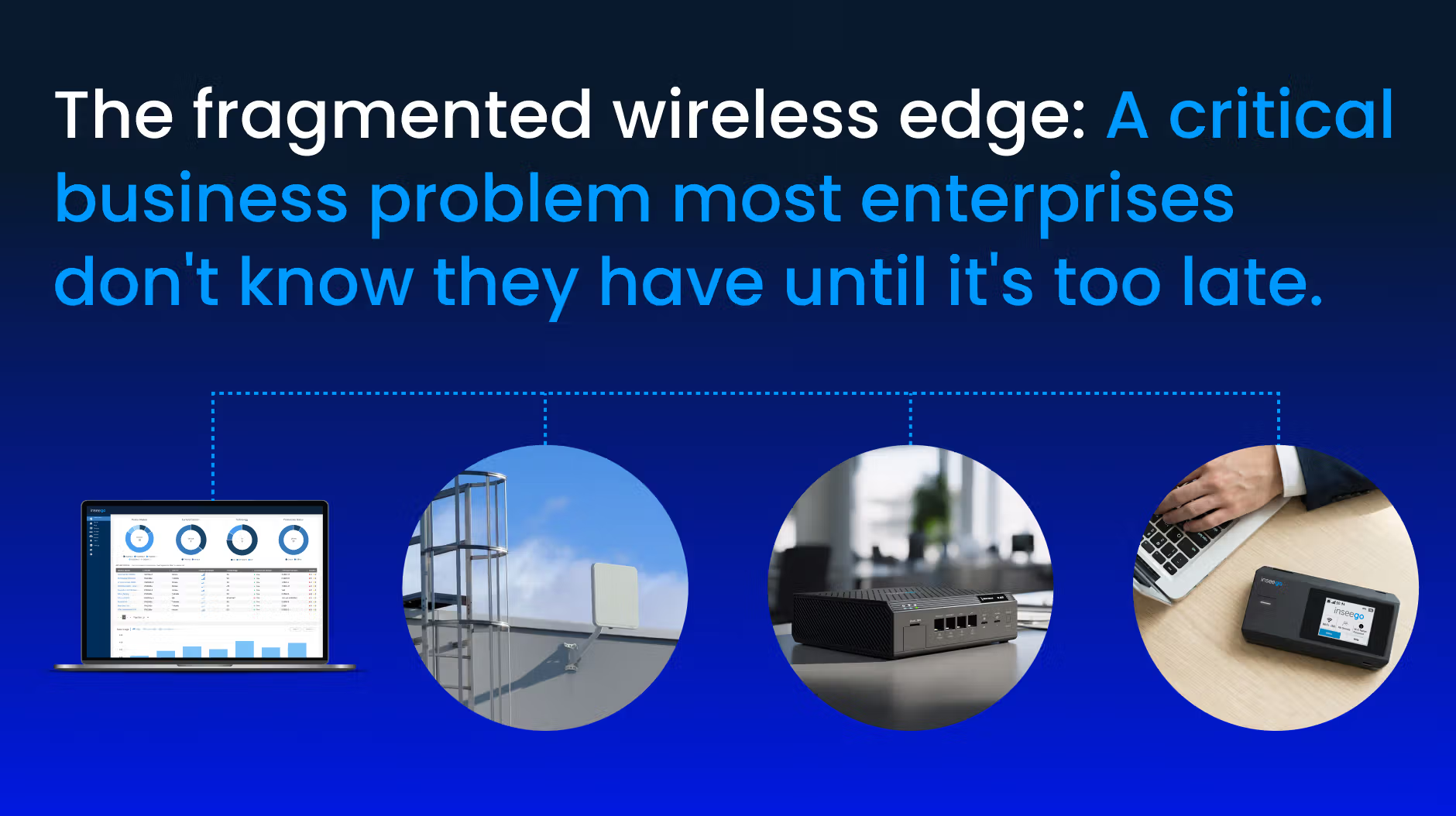
The fragmented wireless edge: A critical business problem most enterprises don't know they have until it's too late
March 13, 2026
The "race to 5G" has moved into a new, more difficult phase. Most enterprises have already deployed the hardware, hotspots for mobile teams, routers for branch backup, and gateways for warehouse automation. But because these solutions were often sourced for individual projects over time, they have created a fragmented mess of disconnected networks.
By the time IT management finally assesses the total network, they find a collection of disconnected components rather than a streamlined architecture. This fragmentation fails to support broader operations, transforming a technical inefficiency into a direct financial drain.
The hidden risks of the fragmented edge
Most organizations believe they are "connected" as long as the lights are green. However, underneath the surface, this lack of structural integrity creates three critical points of failure:
Incompatible software and hardware: IT teams are forced into a constant cycle of "translation" because hardware and software exist in silos. Troubleshooting becomes a manual scavenger hunt across different interfaces, forcing expensive technical talent to waste time on basic maintenance instead of high-value innovation. When every device requires a different management approach, the time-to-resolution for even simple connectivity issues increases exponentially.
Data and visibility silos: When using non-connected technology, enterprises lose the ability to see the "big picture". Data consumption, signal health, and device status are trapped within individual vendor portals. This leads to reactive management, where decisions are made based on incomplete data, and businesses often don't realize they have security vulnerabilities or data overages until the damage is already done.
Inconsistent compliance and security: Maintaining a unified standard is nearly impossible in a fragmented environment. Firmware versions vary, and security settings diverge, making the network fragile because the underlying components were never designed to work as a single unit. This drift means that a security policy successfully deployed in a branch office may not exist on the mobile hotspots used by the field team, leaving the enterprise vulnerable to inconsistent enforcement.
Transitioning to a Unified Wireless Edge
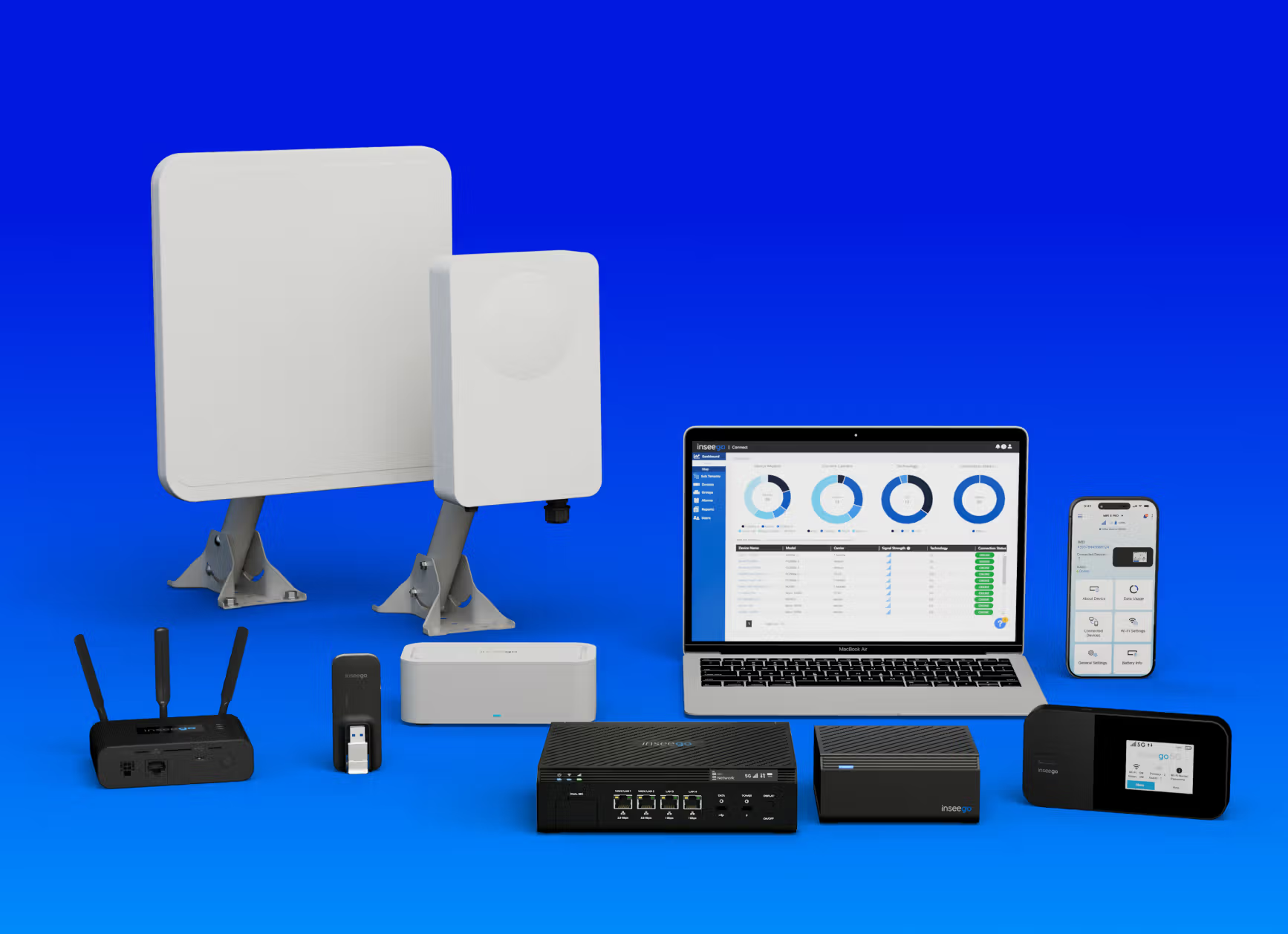
Forward-thinking organizations are moving away from this fragmented approach and toward a unified wireless edge. Inseego has designed a portfolio that replaces these isolated silos with a single, high-performance portfolio.
Unlock lightning-fast 5G internet almost anywhere
A cohesive portfolio, built for the enterprise
Inseego FWA and cloud-based management portfolio
Inseego provides the structural integrity that bridges the gap between different edge use cases:
The mobile wireless edge: The MiFi® PRO M4 ensures the mobile workforce operates on the same secure platform as the rest of the company, providing high-speed, secure data access for employees on the move.
The indoor fixed wireless edge: The Wavemaker™ FX Series delivers high-performance branch connectivity for retail and office locations using the same core architecture as mobile solutions, allowing for seamless primary or failover 5G integration.
The industrial & outdoor wireless edge: High-gain outdoor CPEs extend this unified network to challenging environments like ports and construction sites, ensuring no location is left isolated by environmental barriers.
Enterprise wireless edge orchestration via Inseego Connect™
Inseego Connect
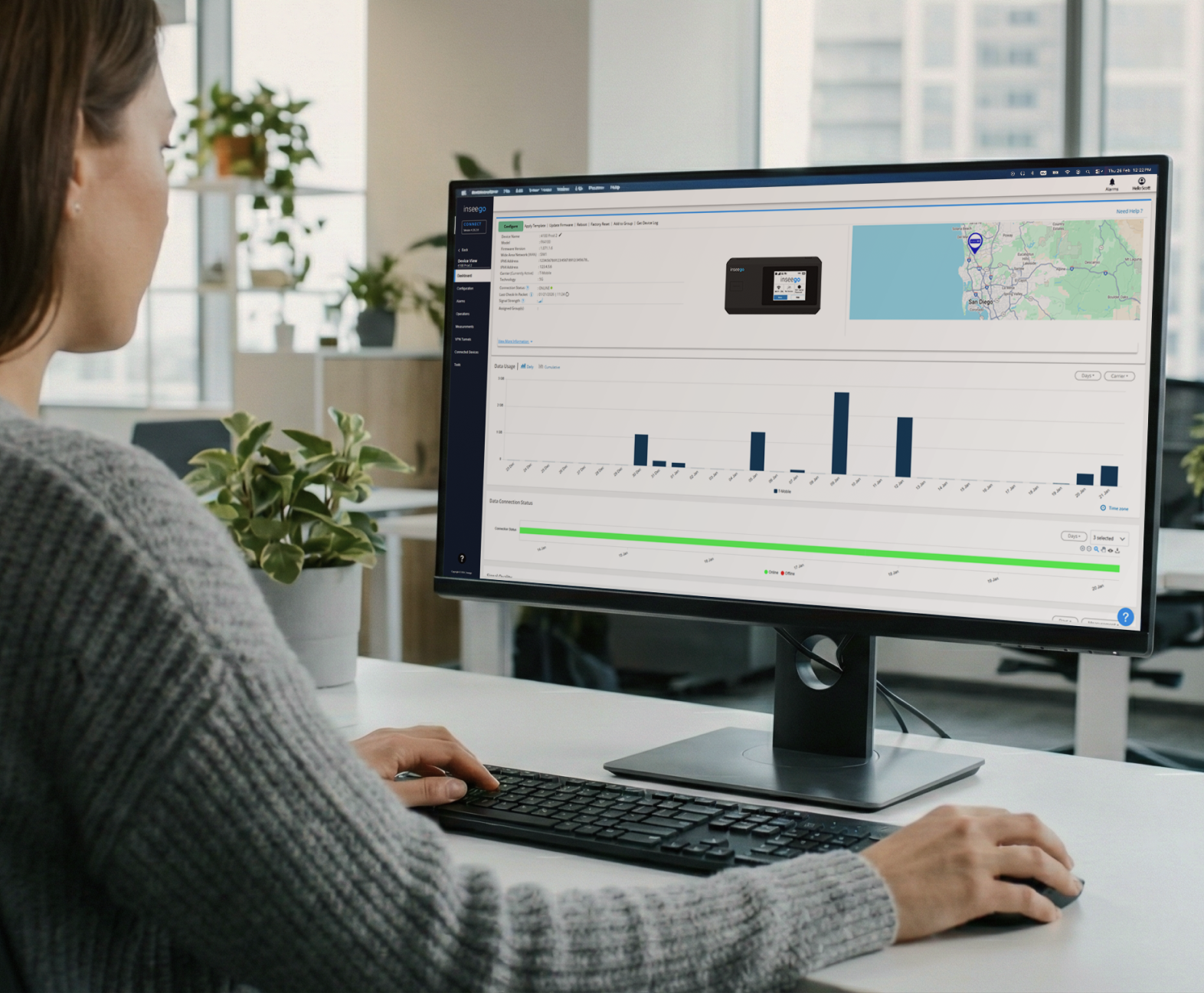
The final piece of the puzzle to solve fragmentation is a unified command center. Inseego Connect allows enterprises to orchestrate their entire wireless edge from one cloud-based platform:
Zero-touch deployment: Devices arrive at remote sites and configure themselves automatically based on pre-defined global policies. This eliminates the need for expensive "truck rolls" or on-site IT resources, enabling rapid, large-scale deployments.
Proactive fleet management: IT administrators gain real-time visibility to identify weak signals, monitor bandwidth consumption, or flag high-data users across the entire global fleet. This allows teams to resolve connectivity or usage issues before they impact business productivity.
Automated policy synchronization: Push global firmware updates and security patches to thousands of devices simultaneously. By synchronizing the entire fleet, no device is left behind, and no configuration is left to chance.
Deep diagnostic capabilities: Beyond simple status checks, Inseego Connect provides advanced remote troubleshooting tools. IT teams can perform out-of-band management and signal analysis without being physically present at the device location.
Data usage and cost control: With centralized visibility into data consumption, enterprises can set automated alerts and triggers. This prevents "bill shock" by identifying heavy-data-usage applications or devices that exceed their allocated thresholds across the fragmented network.
Health and performance analytics: The platform aggregates historical data to provide insights into network performance trends. This allows enterprises to move from reactive troubleshooting to predictive maintenance, ensuring the wireless edge is optimized for peak performance 24/7.
The bottom line: Unified orchestration is the new operational standard
For the modern enterprise, the goal has shifted from simply being "connected" to being unified. A fragmented edge is a silent drag on business productivity, eating away at budgets through wasted labor and unforeseen outages.
By adopting an integrated strategy built on the Inseego portfolio, businesses transform a management headache into a primary competitive advantage. In a world that moves in real-time, your organization should scale at the speed of your strategy, not the speed of your most disconnected device.
Talk to our experts!
Set your customers or business up with the fastest, most secure, easiest, most reliable fixed wireless solutions.